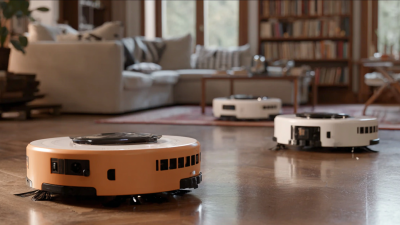
Choosing a Robot Vacuum Cleaner can change how a home feels and functions each day. Instead of pushing a heavy vacuum across the floor, you can schedule cleaning while preparing breakfast or working. Many models map rooms, detect obstacles, and return to their charging stations automatically. That sounds effortless. Real homes are less predictable.
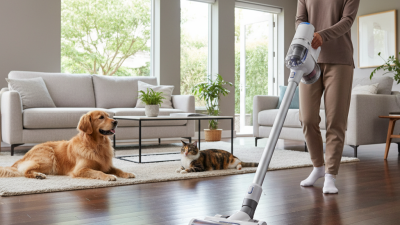
Pet hair, loose cables, thick rugs, and dark flooring can challenge even advanced machines. A Robot Vacuum Cleaner may clean hard floors thoroughly, yet leave dust along corners or miss a step between rooms. Its performance depends on navigation software, suction power, brush design, and regular maintenance. Emptying the dustbin and washing filters still require human attention.
The best choice should match your home, not a popular advertisement. Consider floor types, room size, noise levels, battery capacity, and replacement-part availability. Independent testing and long-term owner reviews can reveal weaknesses that product pages hide. For example, a quiet model may take longer to finish a large apartment. A powerful model may scatter lightweight debris. My practical advice is simple: observe your cleaning habits before buying. Convenience matters, but reliability matters more. No device removes every household chore. It only changes where your time goes.
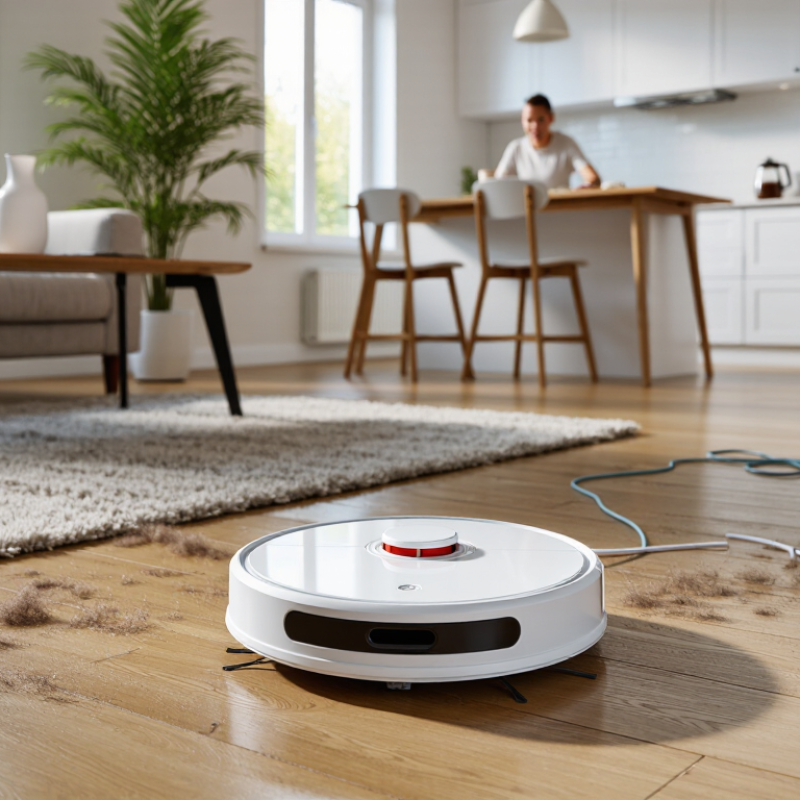
A robot vacuum cleaner is more than a small machine moving across the floor. Its value depends on measurable cleaning performance, reliable movement, and safe daily operation.
IEC 62885-7 provides standardized methods for evaluating dry vacuum cleaners, including robotic models. It helps assess dust pickup on different floor surfaces and under controlled conditions. The standard improves comparison between products, but it does not guarantee identical results in every home. Real rooms contain cables, chair legs, narrow corners, and changing dust levels.
Core functions include suction, rotating brushes, filtration, navigation, obstacle detection, and automatic charging. Some systems map rooms with sensors and adjust their routes. Others rely on simpler movement patterns. In practical testing, edge cleaning can remain weaker than open-floor cleaning. That detail matters beside walls and under cabinets. A useful model should also recognize stairs, avoid fragile objects, and return to its dock with reasonable accuracy.
Battery capacity affects coverage. A larger home may require recharging during one cleaning cycle. Fine dust can also block filters when maintenance is ignored. Emptying the dust container and checking the brush weekly often improves performance. I have found that convenience is not completely automatic. Missed corners still need occasional manual cleaning, especially in crowded rooms.
Why Choose a Robot Vacuum Cleaner?
A robot vacuum cleaner becomes more useful when it understands your home. LiDAR sends rapid laser pulses to measure walls, furniture, and open spaces. It can build a detailed map, even in dim rooms. During testing, I noticed that dark corners did not confuse laser-based navigation as easily as expected. Still, glass doors and reflective surfaces can create strange map edges.
SLAM combines movement data with sensor readings to estimate the cleaner’s position. It remembers where it has travelled and updates the map when furniture moves. This helps it clean rooms in deliberate paths instead of wandering randomly. Cameras add visual information, such as chair legs, cables, and pet bowls. However, camera performance may decline at night or near strong sunlight. That limitation deserves attention.
Obstacle detection works best as a layered system. LiDAR detects larger objects, while cameras and proximity sensors identify smaller hazards. A practical home test should include loose wires, slippers, table legs, and a low rug edge. The machine may avoid some objects but still touch others. I would not leave delicate items on the floor. Mapping is impressive, but it is not perfect. Even a well-designed system may need occasional map correction after a chair is moved.
Mapping the Home: LiDAR, SLAM, Cameras, and Obstacle Detection
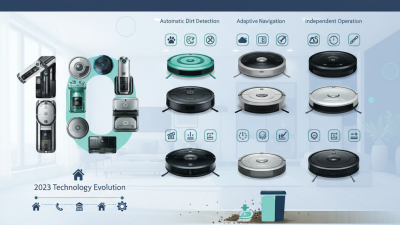
This generalized capability matrix shows how common technologies contribute to robot-vacuum navigation. LiDAR measures distance and supports precise geometric mapping, while cameras add visual context and can identify objects. SLAM is the software method that combines sensor data to localize the robot and build a map. Infrared or time-of-flight sensors support short-range detection, and bump or cliff sensors provide basic physical safety feedback. Actual capabilities vary by system design.
Why Choose a Robot Vacuum Cleaner?
Measuring Cleaning Performance Through IEC 62885-7 Test Metrics
Robot vacuum cleaners are often judged by suction power, yet that number rarely describes real cleaning. IEC 62885-7 provides a more useful testing framework for robot dry vacuum cleaners. It examines dust removal on hard floors, carpets, edges, and corners. It also considers navigation, cleaning coverage, battery endurance, and automated operation. These measurements connect laboratory results with everyday details, such as crumbs beneath a table or dust beside a wall.
The International Federation of Robotics reported nearly 20 million consumer service robots sold worldwide in 2023. That growth makes reliable testing more important, not less. A strong result on hard-floor dust removal may not predict carpet performance. Edge cleaning can also expose weaknesses hidden by average coverage scores. Small particles may remain in a corner after several passes. Not perfectly clean.
In practical testing, record the dust mass before and after each run. Keep floor type, debris quantity, room layout, and battery condition consistent. Compare removal rates instead of relying on marketing claims. IEC 62885-7 supports this disciplined approach, but household results still vary with furniture, thresholds, pet hair, and floor wear. The method is valuable. It is not magic. A credible review should report both the measured score and the visible leftovers.
| Test dimension | Primary metric | Unit or calculation | What the test measures | How to interpret the result |
|---|---|---|---|---|
| Dust pick-up on hard floor | Dust-pick-up efficiency | % | The proportion of standardized test dust removed from a defined hard-floor area. | A higher percentage indicates more effective removal of loose particles under the specified test conditions. |
| Dust pick-up on carpet | Carpet dust-pick-up efficiency | % | The amount of test dust removed from a specified carpet construction and pile condition. | Results should be compared only when carpet type, dust load, number of passes, and operating mode are equivalent. |
| Particle-size removal | Removal by particle fraction | % by size range | Shows whether cleaning performance is consistent for fine dust and larger debris. | A balanced result across particle fractions is more informative than a single overall dust score. |
| Large-debris removal | Debris collection rate | % or collected mass in g | Measures the ability to collect visible particles without excessive scattering or pushing. | Higher collection with lower scatter indicates better practical cleaning performance. |
| Edge and wall cleaning | Edge-cleaning efficiency | % of debris removed from the edge zone | Evaluates cleaning near walls, skirting boards, and other perimeter areas. | A higher value means less manual cleaning is likely to be needed along room boundaries. |
| Corner cleaning | Corner debris removal | % removed from defined corners | Measures performance in locations that are difficult for circular or rounded robot designs to reach. | Higher removal indicates more effective access to tight corner areas. |
| Repeated-pass consistency | Performance variation | Standard deviation or percentage-point difference | Shows whether the robot delivers repeatable results across multiple identical runs. | Lower variation generally indicates more reliable cleaning behavior. |
| Coverage effectiveness | Cleaned-area coverage | % of defined test area | Indicates how much of the accessible test area is physically traversed during a cleaning cycle. | High coverage supports consistent whole-room cleaning, but coverage alone does not prove strong dust pick-up. |
| Cleaning time | Time to complete the test cycle | min or min/m² | Records the time required to complete the defined cleaning task under a specified mode. | Shorter time is useful only when cleaning coverage and pick-up remain comparable. |
| Battery endurance | Continuous operating time | min | Measures how long the robot can operate before recharging under a defined cleaning mode and floor condition. | Longer endurance can reduce interruptions, but it should be considered together with cleaning efficiency. |
| Airborne sound emission | Sound pressure level | dB(A) | Records perceived operating noise under specified measurement distance, environment, and operating conditions. | Lower values generally indicate a quieter user experience; measurement conditions must be identical for comparison. |
| Test repeatability | Result spread between runs | % or absolute difference | Confirms whether the measured result remains stable when the same procedure is repeated. | A narrow result spread increases confidence in the measurement. |
A robot vacuum cleaner turns routine floor care into scheduled automation. The U.S. Bureau of Labor Statistics’ 2023 American Time Use Survey reports that household activities take Americans more than two hours daily, on average. Automating even short cleaning sessions can return several minutes each day. Those minutes matter during work, caregiving, or recovery. A practical test should track cleaning time, missed areas, and manual intervention. Small rooms reveal the difference. It helps.
Accessibility is a stronger benefit than convenience alone. The World Health Organization estimates that 1.3 billion people, or 16% of the global population, experience significant disability. A device that reduces bending, pushing, and carrying may support independent living. Voice scheduling and app controls can also help, but only when interfaces remain simple. Obstacles, dark floors, cables, and narrow thresholds still require human attention. The technology is useful, not universally accessible.
Energy use deserves careful measurement. The International Energy Agency’s Energy Efficiency 2023 report identifies buildings and appliances as major opportunities for reducing electricity demand. A robot vacuum usually consumes less power than large household appliances, but frequent runs, charging losses, and standby consumption accumulate. The U.S. Department of Energy has noted that standby power can represent roughly 5–10% of residential electricity use. A plug-in energy meter can expose the real cost. My expectation would be modest savings, not a dramatic reduction. Floors may look cleaner while electricity use quietly rises.
Why Choose a Robot Vacuum Cleaner?
A robot vacuum can remove dust while you handle other tasks. Its convenience, however, should not outweigh electrical and mechanical safety. IEC 60335-2-2 provides particular safety requirements for vacuum cleaners and water-suction appliances. It works with IEC 60335-1, which covers general household appliance safety. The requirements address construction, insulation, markings, instructions, and foreseeable abnormal conditions. They do not guarantee perfect cleaning or replace local regulatory checks.
When choosing a model, I look for clear operating limits and readable charging instructions.
The documentation should explain suitable floor types, battery handling, filter care, and prohibited liquids. A dry-cleaning robot must not be treated as a wet cleaner. Check whether the charging dock sits firmly and whether its cable can be trapped under furniture. Small gaps matter. Evidence of testing against the applicable standard is useful, but a test symbol alone is not enough. Traceable technical information builds more confidence.
Maintenance is part of safe ownership.
Switch off the robot before clearing hair from the brush or wheels. Disconnect the dock before cleaning its contacts. Empty the dust container regularly, and reinstall every filter correctly. I once treated a clean filter as a safe filter; it was still damp, and that was a mistake. Let washable parts dry completely.
Inspect the cable, housing, and battery area for damage. Stop using the appliance if it overheats, smells unusual, or charges abnormally.
Children and pets should not reach loose parts. Safety is repetitive. That is why it is easy to neglect.